











As television evolves, Breaking Bad ultimately stands out to many audiences as the best series ever.
Breaking Bad tells the story of a high school chemistry teacher, Walter White, who has recently been diagnosed with cancer and is worried about his family’s future. As a result of expensive medical bills for chemotherapy and the fear of not being able to provide for his family, he is desperate to find a way to make more money. While searching for opportunities, he bumps into his former student, Jesse Pinkman, who is familiar with the drug industry. White’s understanding of how profitable the drug industry can be makes him recognize that he can apply his chemistry skills to make irresistible products like methamphetamine. Pinkman and White end up becoming partners in the operation and start from trial and error to becoming the largest methamphetamine producers.
Over time, White’s intentions shift after experiencing the fame and fortune his product brings within the criminal world. He shifts away from wanting to provide for his family and afford chemotherapy to wanting to build the largest drug empire. As he adopts the alias “Heisenberg,” his overall personality becomes cold and intolerable, and his ego skyrockets. His character shift is shown in the iconic line when White declares, “I am the one who knocks,” showing he no longer sees himself as a victim but as the danger. On the other hand, Pinkman’s character portrays the emotional toll of the pair’s actions and faces mistreatment and manipulation from White. Pinkman’s character shows guilt and severe depression throughout their partnership. This contrast highlights a key lesson in the series: power can lead to corruption, while guilt can lead to self-awareness.
However, their toxicity defines the series as neither can fully abandon the other, despite the harm they cause each other. Their dynamic can be seen in popular clips from the series. In season four, episode one, “Boxcutter,” White and Pinkman are in a life-threatening drug operation. White says to Gustavo Fring, “You kill me, you have nothing. You kill Jesse, you don’t have me,” showing how their fates are linked. Eight episodes later, in “Bug,” Jesse is given a chance to leave White and join another drug company, one ruled by Fring. Pinkman responds, “You kill Mr. White, you’re gonna have to kill me too,” showing loyalty even after the emotional downfall. Their bond is toxic, yet they’re inseparable; the tension between the two keeps viewers invested.
A major reason the series is a must-watch is its storytelling. The show builds tension and shows how each small choice leads to bigger consequences and conflict. Each episode is unique: it mixes suspense, foreshadowing, and emotional character moments. Breaking Bad does a great job of building a fast-paced yet complex plot that keeps the audience entertained from start to finish, according to The Week.

Another element that sets Breaking Bad above typical television series is its extraordinary acting. Lead actor Bryan Cranston won four “Primetime Emmy Awards for Outstanding Lead Actor in a Drama Series” for his portrayal of Walter White, according to the Los Angeles Times. These awards weren’t based on the show overall, but on specific episode performances. Cranston submitted episodes such as “Full Measure” from season three and “Ozymandias” from season five, which feature his most intense scenes in the series. In “Full Measure,” Cranston’s character shifts, becoming colder and more intolerable. Instead of the innocent chemistry teacher, White’s more villainous side is revealed with his ability to easily manipulate others. In “Ozymandias,” Cranston portrays panic and desperation as things fall apart. The acting stands out to audiences because it feels believable and realistic. When asked about the acting, Madison Santos, junior, said, “It didn’t feel like acting at all, it felt like I was watching real events.”
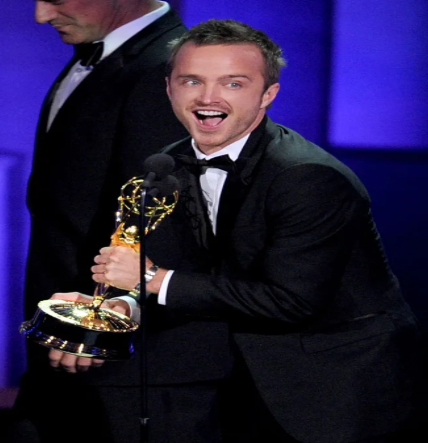
Another key reason the acting stands out is Aaron Paul’s portrayal of Jesse Pinkman. Before Breaking Bad, Paul was unknown, appearing only in small roles and featuring on the game show The Price is Right in 1999. He originally auditioned for the role of Pinkman as a minor character who was supposed to be killed off in the first season. However, Paul’s audition stood out to creators as they “were impressed with how well Paul presented such a flawed character who carried a unique sense of innocence,” according to Screen Rant. The creators favored his performance so much that they not only cast him but also expanded his role into a main character. Audiences immediately connected with his character. He was able to portray strong emotions of stress, being distraught, and the effects of manipulation through his expressions and tone.
Paul went on to win three “Primetime Emmy Awards for Outstanding Supporting Actor in a Drama Series,” according to Television Academy. His portrayal of Pinkman’s mental and emotional struggles made the character feel real and deeply human.
In the end, Breaking Bad isn’t just another show about crime; it’s a story about choices and the consequences of them. The character transformations show how easily people can be changed by their decisions and the world around them. The tension, suspenseful storytelling, and emotional acting make the series feel real. These factors are what keep viewers thinking about the show after watching, making Breaking Bad one of television’s greatest series.